
Concrete Parking Lot Solutions in Michigan: Costs, Contractors, and Codes
Concrete Parking Lot Solutions for Long-Term Planning in Michigan
Parking lot decisions in Michigan are rarely simple. Climate, traffic loads, regulatory requirements, and long-term maintenance all play a role in determining which surface performs best over time.
This page was created by the Michigan Concrete Association to provide clear, statewide guidance for property owners, municipalities, institutions, and commercial decision-makers evaluating concrete parking lot solutions. Rather than focusing on individual projects or vendors, this resource is designed to explain how concrete performs across Michigan, how costs are evaluated over time, and how local codes and conditions influence material selection.
If you are comparing concrete to asphalt, planning a parking lot replacement, or researching long-term ownership costs, this page serves as the starting point. From here, you can explore local considerations, cost comparisons, and real-world examples across the state.
Concrete has been used extensively throughout Michigan for infrastructure, commercial developments, and institutional facilities because it performs reliably under demanding conditions.
Michigan parking lots must withstand:
- Repeated freeze-thaw cycles
- Heavy vehicle traffic
- Snow plowing and deicing operations
- Long service expectations for public and commercial properties
Concrete’s strength and structural capacity allow loads to be distributed more evenly over the subbase, reducing or even eliminating surface deformation due to loading. When properly designed for drainage, joint spacing, and climate exposure, concrete parking lots are often selected for long-term ownership scenarios where durability and reduced maintenance disruption are priorities.
Concrete may not be the right solution for every site. However, it is frequently evaluated when property owners are looking beyond short-term installation costs and focusing on lifecycle performance.

What Does a Concrete Parking Lot Cost in Michigan?
Cost is one of the first questions most decision-makers ask, but it is also one of the most commonly misunderstood.
Concrete parking lot costs in Michigan vary based on several factors, including:
- Project size and layout
- Slab thickness and reinforcement requirements
- Subbase preparation and drainage
- Site access and phasing needs
- Local labor and material conditions
While concrete typically has a higher upfront installation cost than asphalt, many owners evaluate concrete based on total cost of ownership, not just initial price per square foot.
In Michigan’s climate, surfaces that require frequent resurfacing, sealcoating, or patching can accumulate significant maintenance costs over time. Concrete’s longer service life and reduced maintenance cycles are often key reasons it remains part of long-term planning conversations.
For a detailed breakdown of upfront costs, maintenance expectations, and lifecycle comparisons, visit:
Concrete vs Asphalt for Michigan Parking Lots
Concrete and asphalt each have characteristics that may make them suitable for specific applications. The right choice depends on how a parking lot will be used, how long it is expected to serve the property, and how maintenance is managed.
Asphalt Considerations
Asphalt is commonly selected when:
- Initial budget constraints are the primary driver
- Short-term use is expected
- Faster installation timelines are required
However, asphalt surfaces typically require:
- Regular sealcoating
- Periodic resurfacing
- Ongoing crack and pothole repairs
These maintenance cycles can increase total cost over time, especially in freeze-thaw climates.
Concrete Considerations
Concrete is often evaluated when:
- Long-term ownership is planned
- Traffic loads are heavy or consistent
- Maintenance disruptions need to be minimized
- Lifecycle cost matters more than initial installation
Concrete’s performance advantages are realized over decades, not months. As a result, many Michigan property owners evaluate both materials across a 20- to 40-year horizon rather than comparing upfront costs alone. For a closer look at commercial sites, see Concrete vs Asphalt for Commercial Parking Lots.
Michigan Codes, ADA Requirements, and Local Regulations
Parking lot construction in Michigan must comply with a combination of state standards, accessibility requirements, and local regulations.
While codes and standards may vary by project, common considerations include:
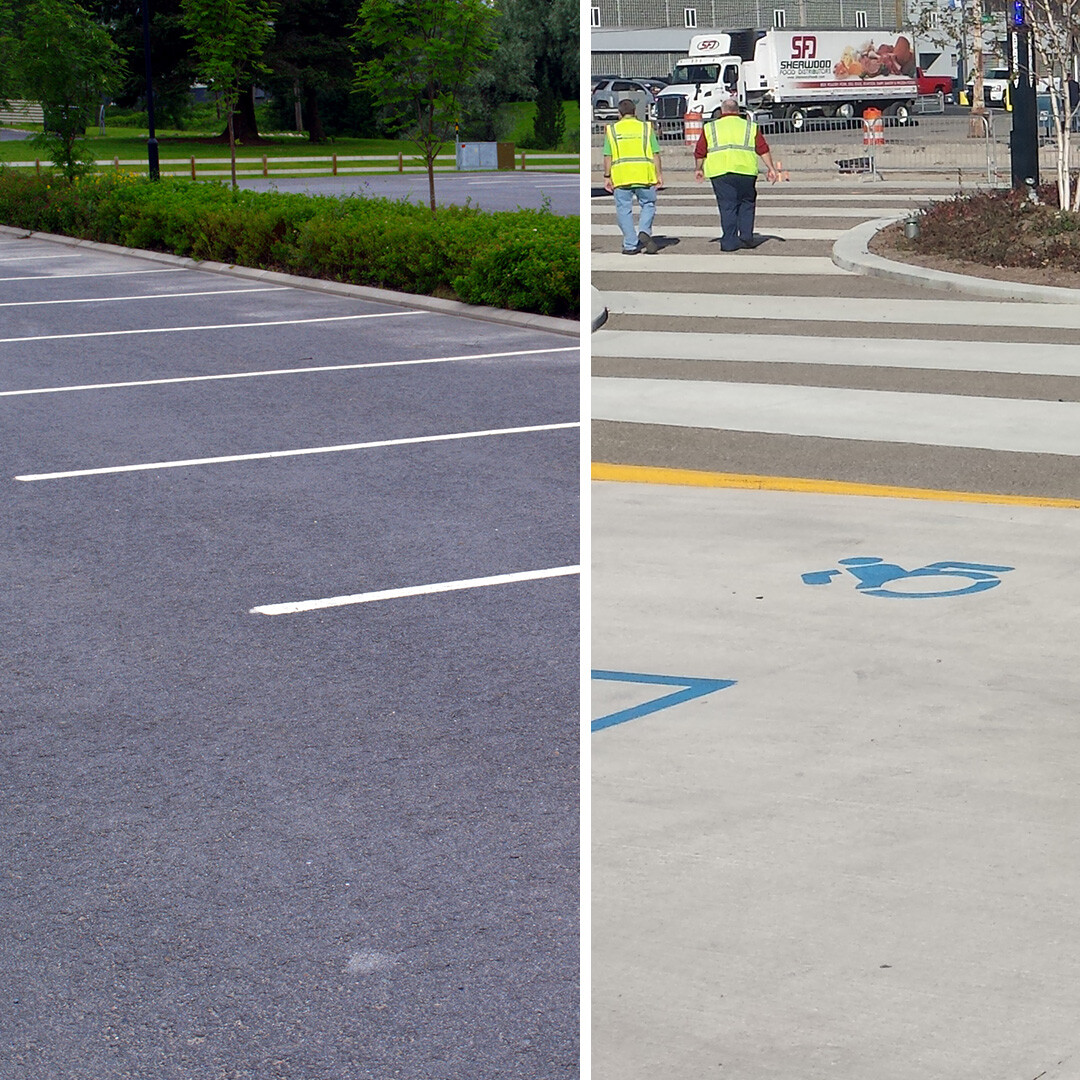
- ADA-compliant slopes, striping, and access routes
- Stormwater management and drainage requirements
- Snow storage and plowing considerations
- Local zoning or site plan approvals
Concrete parking lots are often designed with these requirements in mind, particularly for institutional, municipal, and commercial properties where compliance and longevity are critical.
Because regulations can vary by city, many owners begin with a statewide understanding before reviewing local requirements. This page provides that broader context, while city-specific pages explore how these considerations apply locally.

Choosing the Right Parking Lot Solution for Long-Term Ownership
Selecting a parking lot material is not just a construction decision. It is an operational decision that affects maintenance budgets, tenant experience, and long-term planning.
Concrete may be considered when:
- The property is intended for long-term ownership
- Predictable maintenance costs are preferred
- Heavy vehicles or frequent traffic are expected
- Reduced surface deterioration is a priority
- Concrete will be used for more than just parking (such as farmers markets)
Asphalt may be considered when:
- Shorter service life is acceptable
- Installation speed is critical
- Budget constraints outweigh long-term maintenance concerns
There is no universal solution. This page exists to help decision-makers evaluate tradeoffs clearly before moving forward.
Local Parking Lot Considerations Across Michigan
While many parking lot considerations apply statewide, local conditions can influence design, cost, and performance. Climate exposure, traffic patterns, and municipal requirements vary across Michigan.
To explore how these factors apply locally, visit:
Each local page builds on this statewide guidance while addressing city-specific conditions and planning considerations.
Real-World Performance and Cost Examples
Beyond specifications and cost tables, many decision-makers want to understand how materials perform in practice.
Michigan businesses, institutions, and municipalities have increasingly evaluated concrete after experiencing recurring maintenance issues with asphalt. In many cases, the decision to switch materials is driven by long-term budgeting, operational continuity, and reduced repair cycles.
See Michigan Concrete Award-winning parking lots:
- St. Marys Cement Parking Lot, Detroit (2021 winner, commercial parking lots)
- Clarkston DPW Parking Lot (2021 winner, municipal)
For background on planning and ownership, read Concrete Parking Lots 101, or download MCA’s cost guide below.
The Michigan Concrete Association represents a broad network of industry professionals, including contractors, producers, engineers, and suppliers across the state. MCA’s role is to provide education, technical resources, and industry leadership—not to sell projects or endorse specific companies.
This page, and the resources linked from it, are designed to help decision-makers:
- Ask better planning questions
- Understand long-term cost implications
- Compare materials accurately
- Navigate Michigan-specific conditions
Explore Additional Concrete Parking Lot Resources
This page is part of a larger resource framework designed to support informed decisions at every stage.
Recommended next steps:
- Download the Concrete vs Asphalt Cost Guide
- Concrete Parking Lot Design Guide: thickness, drainage, and loads
- Can concrete parking lots handle Michigan traffic and winters?
- Concrete vs asphalt for commercial parking lots
- Explore common myths about concrete parking lots in Michigan
- Browse frequently asked questions about cost, lifespan, and performance
- See all concrete parking lot resources
Each resource is interlinked so you can move deeper as questions arise.
Connect With an MCA Member
If you would like to continue your research or explore how these considerations apply to a specific site, MCA maintains a statewide directory of member companies involved in Michigan’s concrete industry.
Exploring member companies is optional and intended to support informed planning.