
Concrete Parking Lot FAQs for Michigan Property Owners
Straight answers to common questions about concrete performance, cost, and durability in Michigan conditions.
Many parking lot decisions start with quick online searches. This page answers the most common questions we see from Michigan property owners evaluating concrete for the first time. These answers are designed to provide clarity before material selection, budgeting, or contractor conversations begin.
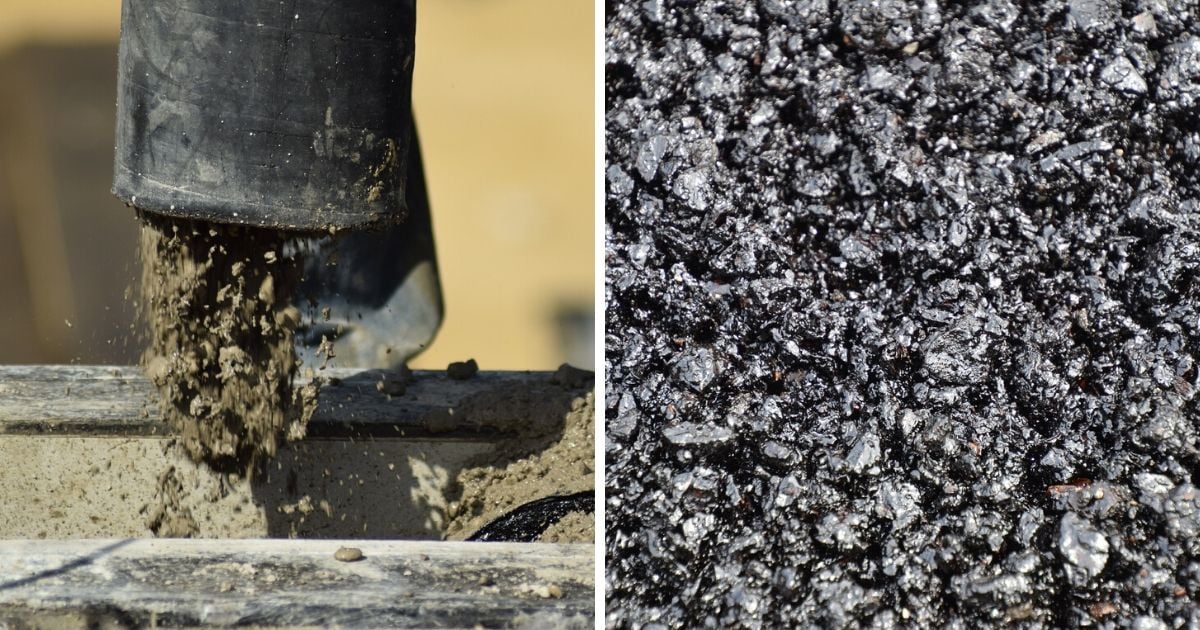
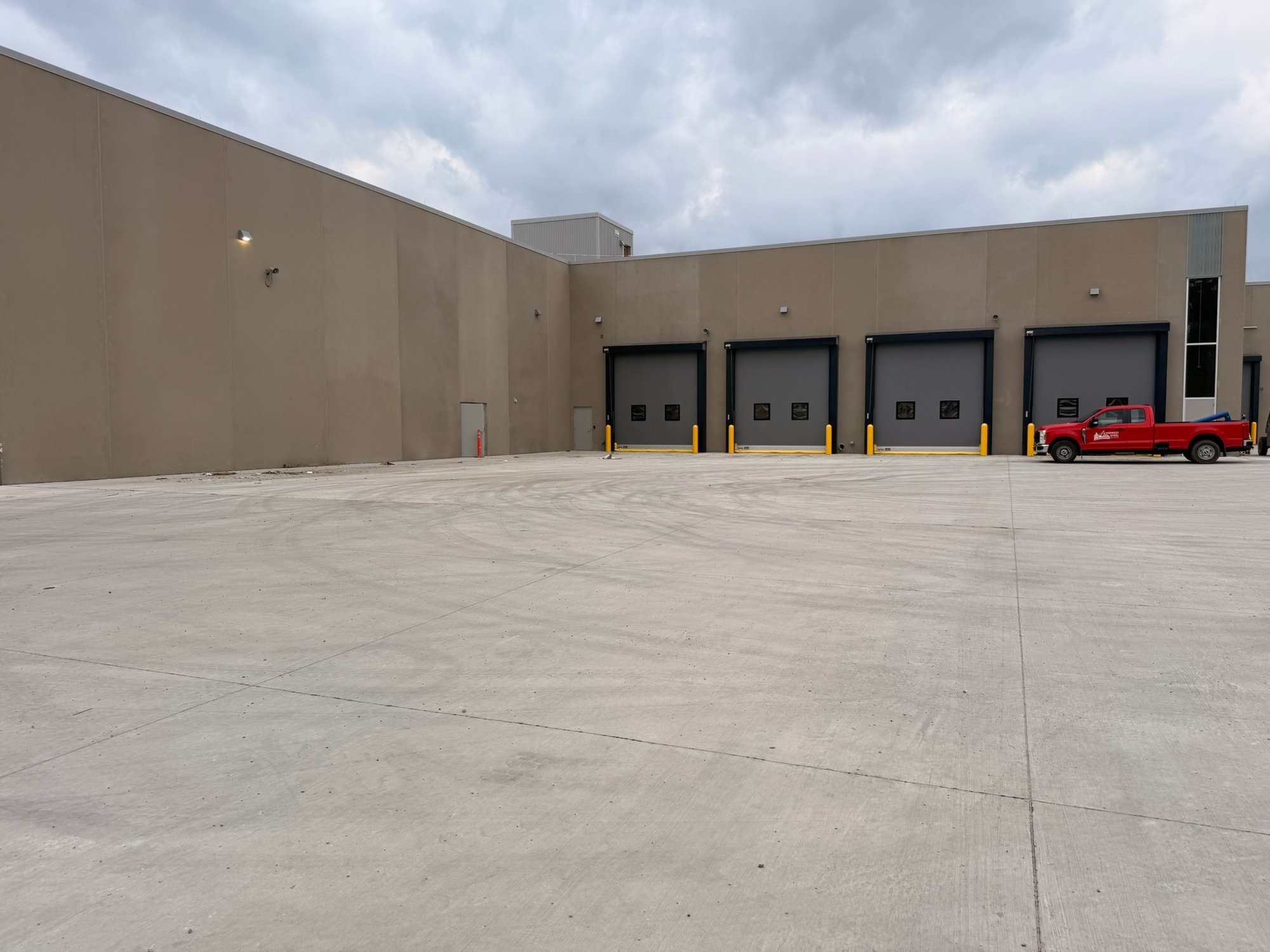
When designed and installed for Michigan conditions, concrete parking lots often provide decades (20–40 years) of service. Performance depends on proper design, jointing, drainage, and subbase stability rather than surface material alone. Asphalt parking lots typically last about 15–20 years, and maintenance repairs typically start in years 3–5.
The Michigan Department of Transportation reports that concrete pavement averages 27.5 years before repairs are needed, compared with 15.5 years for asphalt (see MCA's concrete vs. asphalt comparison).
Longer service life can significantly reduce replacement cycles and long-term disruption for commercial properties.
How Much Does a Concrete Parking Lot Cost in Michigan?
The cost of a concrete parking lot depends on its size, slab thickness, subbase and drainage work, site access, and local material and labor conditions.
Concrete usually costs more upfront than asphalt, but it often costs less over its life because it reduces sealcoating, resurfacing, and patching. Concrete typically lasts 20–40 years, compared with about 15–20 years for asphalt.
For a detailed lifecycle comparison, download the Concrete vs Asphalt Cost Guide.
How Long Do Concrete Parking Lots Take to Install?
The installation timeline for a concrete parking lot depends on project size, site conditions, and weather, but most projects follow a predictable sequence.
For a typical commercial parking lot, construction generally takes 1–2 weeks from start to finish; additional time may be required before the surface is opened to full traffic.
The process typically includes:
- Site preparation and subbase construction (this is usually the same timeframe when using asphalt)
- Forming, reinforcement placement, and concrete pouring
- Finishing, jointing, and curing
When Can a New Concrete Parking Lot Be Opened to Traffic?
MCA's Suggested Specifications call for keeping all traffic off new concrete pavement for 7 days. Opening a lot earlier should happen only when strength tests confirm the concrete is ready and the design engineer approves. Full strength continues to develop over time.
While concrete installation takes a little longer than asphalt, the curing period is a critical part of long-term performance.
Many projects are completed in phases to minimize disruption, allowing portions of a lot to remain accessible during construction.
Although the upfront installation timeline is longer, property owners often factor this into planning in exchange for longer service life and reduced future maintenance interruptions.
Does Concrete Perform Well in Michigan Winters?
Concrete is commonly used in Michigan infrastructure because it performs reliably through temperature swings when properly constructed. Air-entrained mixes, joint placement, and drainage planning all contribute to winter durability.
Winter performance is influenced as much by design and installation quality as by material choice. For more detail, see Can Concrete Parking Lots Handle Michigan Traffic and Winters?
What Maintenance Does a Concrete Parking Lot Require?
Concrete parking lot maintenance generally focuses on inspection and joint upkeep rather than frequent surface treatments. This can result in fewer maintenance events over time compared to materials that require regular resurfacing.
Maintenance needs vary by usage, traffic, and environmental exposure.
Explore Additional Concrete Parking Lot Resources
Recommended next steps:
Connect With an MCA Member
If you want to discuss site-specific considerations, the Michigan Concrete Association can connect you with a member company in your area.